

Sri Lanka Travel Insurance: What You Need & How to Choose (2026)
The Short Version
Travel insurance is not legally required to enter Sri Lanka, but it is strongly recommended. Ensure your policy covers medical evacuation, adventure activities (if doing safaris or hiking), and trip cancellation. UK travellers should verify their policy covers the full trip duration, including any Maldives extension.
Planning a trip to Sri Lanka?
We guide you from visa to hotels, beaches to hidden temples — and everything in between. Just drop us a WhatsApp, we reply in minutes.
Sri Lanka Travel Insurance: What You Need & How to Choose (2026)
When planning the perfect tropical escape to the Pearl of the Indian Ocean, it is easy to get swept away by the excitement of mapping out ancient temples, idyllic beaches, and thrilling wildlife safaris. However, before you finalise your packing list and start counting down the days until departure, there is one crucial element of trip planning that you cannot afford to overlook: travel insurance. Securing the right travel insurance for Sri Lanka is an essential step in ensuring that your dream holiday remains memorable for all the right reasons. From the bustling streets of Colombo to the misty tea plantations of Nuwara Eliya, having comprehensive coverage allows you to explore this breathtaking island nation with complete peace of mind.
In this extensive guide, we will break down exactly what you need to know about Sri Lanka travel insurance in 2026. We will explore whether it is mandatory, what features to look for in a good policy, how to handle coverage for adventure activities like surfing and safaris, and what you need to know about the local healthcare system. By the end of this article, you will have all the knowledge required to select the best policy for your unique needs, avoiding common pitfalls and ensuring a worry-free adventure.
1. Do You Need Insurance?
One of the most frequently asked questions by travellers preparing for a trip to South Asia is whether travel insurance is a legal requirement for entry. The straightforward answer is no: travel insurance is not currently a mandatory requirement to obtain a visa or enter Sri Lanka. When you apply for your electronic travel authorisation (you can learn more about this process in our Sri Lanka Visa & ETA Guide), you will not be asked to upload proof of an active insurance policy.
However, "not legally required" should never be interpreted as "unnecessary." While border control officials may not ask to see your insurance certificate, travelling without adequate coverage is a significant risk that could leave you facing monumental financial burdens in the event of an emergency. Sri Lanka is a beautiful but wild country where unexpected events—ranging from minor illnesses like food poisoning to more serious accidents—can and do happen.
Consider the potential costs of medical treatment abroad. While Sri Lanka offers excellent healthcare facilities, especially in the private sector in major cities, the costs for foreign nationals paying out-of-pocket can accumulate rapidly. A seemingly minor accident requiring a hospital stay, a series of diagnostic tests, or prescription medication can easily cost thousands of dollars. If your condition is serious enough to require medical evacuation back to your home country, the expenses can skyrocket into the tens of thousands.
Furthermore, travel insurance offers protection beyond just medical emergencies. It safeguards your financial investment in the trip itself. Think about the cost of your flights, your pre-booked accommodation, and any guided tours or experiences you have arranged. If you are forced to cancel your trip due to unforeseen circumstances such as a sudden illness, a family emergency, or significant travel disruptions, a comprehensive policy can help you recoup these non-refundable expenses. In short, while it may not be a legal prerequisite for entry, travel insurance is an absolute necessity for any responsible traveller visiting Sri Lanka.
2. What a Good Policy Covers
Navigating the world of travel insurance can often feel like trying to decipher a foreign language, with policies laden with complex jargon and exhaustive lists of terms and conditions. However, when you strip away the complexities, a robust travel insurance policy for Sri Lanka should always include several core components. When evaluating different providers and plans, look for these essential pillars of coverage:
Emergency Medical and Dental Coverage: This is the most critical element of any travel insurance policy. It covers the cost of medical treatment if you become ill or are injured during your trip. Ensure that the medical coverage limit is sufficiently high—most experts recommend a minimum of $100,000 to $250,000 USD (or equivalent) for international travel. This should cover hospital stays, doctor consultations, surgical procedures, and emergency dental care for unexpected pain or injury to sound, natural teeth.
Medical Evacuation and Repatriation: This is separate from standard medical coverage and is particularly important when travelling to a country like Sri Lanka, where you may be exploring remote areas far from major hospitals. Medical evacuation covers the cost of transporting you to the nearest adequate medical facility, which could involve an expensive helicopter ride or a specially equipped air ambulance. Repatriation covers the cost of returning your remains to your home country in the tragic event of death. Given the potentially astronomical costs associated with these services, ensure your policy has a high limit for evacuation—ideally $500,000 or more.
Trip Cancellation, Interruption, and Delay: This coverage protects your financial investment before and during your trip. Trip cancellation reimburses you for pre-paid, non-refundable expenses if you have to cancel your journey for a covered reason (e.g., severe illness, death in the family, or natural disasters). Trip interruption provides reimbursement if you must cut your trip short and return home early. Trip delay coverage offers compensation for additional expenses, such as meals and accommodation, if your travel is delayed by a specified amount of time (often 6 to 12 hours) due to reasons like severe weather or airline strikes.
Baggage Loss, Damage, and Delay: Airlines and transport operators can occasionally misplace or damage your luggage. Baggage coverage provides compensation for lost, stolen, or damaged personal belongings. If your bags are delayed for an extended period, baggage delay coverage will reimburse you for the purchase of essential items, such as toiletries and a change of clothes, until your luggage is returned to you. Be sure to check the per-item limits, especially if you are travelling with expensive electronics or camera gear.
Personal Liability: This is an often-overlooked but vital feature. Personal liability covers legal expenses and damages if you accidentally cause injury to another person or damage to their property during your trip. For example, if you accidentally knock over an expensive display in a local shop, this coverage could protect you from a hefty financial claim.
3. Adventure Activities Cover
Sri Lanka is a paradise for adventure seekers. From riding the world-class waves on the southern coast to hiking the lush trails of Ella and embarking on thrilling wildlife safaris, the island offers an abundance of adrenaline-pumping activities. If your itinerary involves anything more strenuous than lounging by the hotel pool, you must pay close attention to the adventure activities section of your travel insurance policy.
Many standard travel insurance policies exclude coverage for what they consider "high-risk" or "extreme" sports and activities. If you are injured while participating in an excluded activity, your insurer will likely deny your medical claim, leaving you entirely responsible for the costs. Therefore, it is imperative to review the list of covered activities meticulously before purchasing a policy.
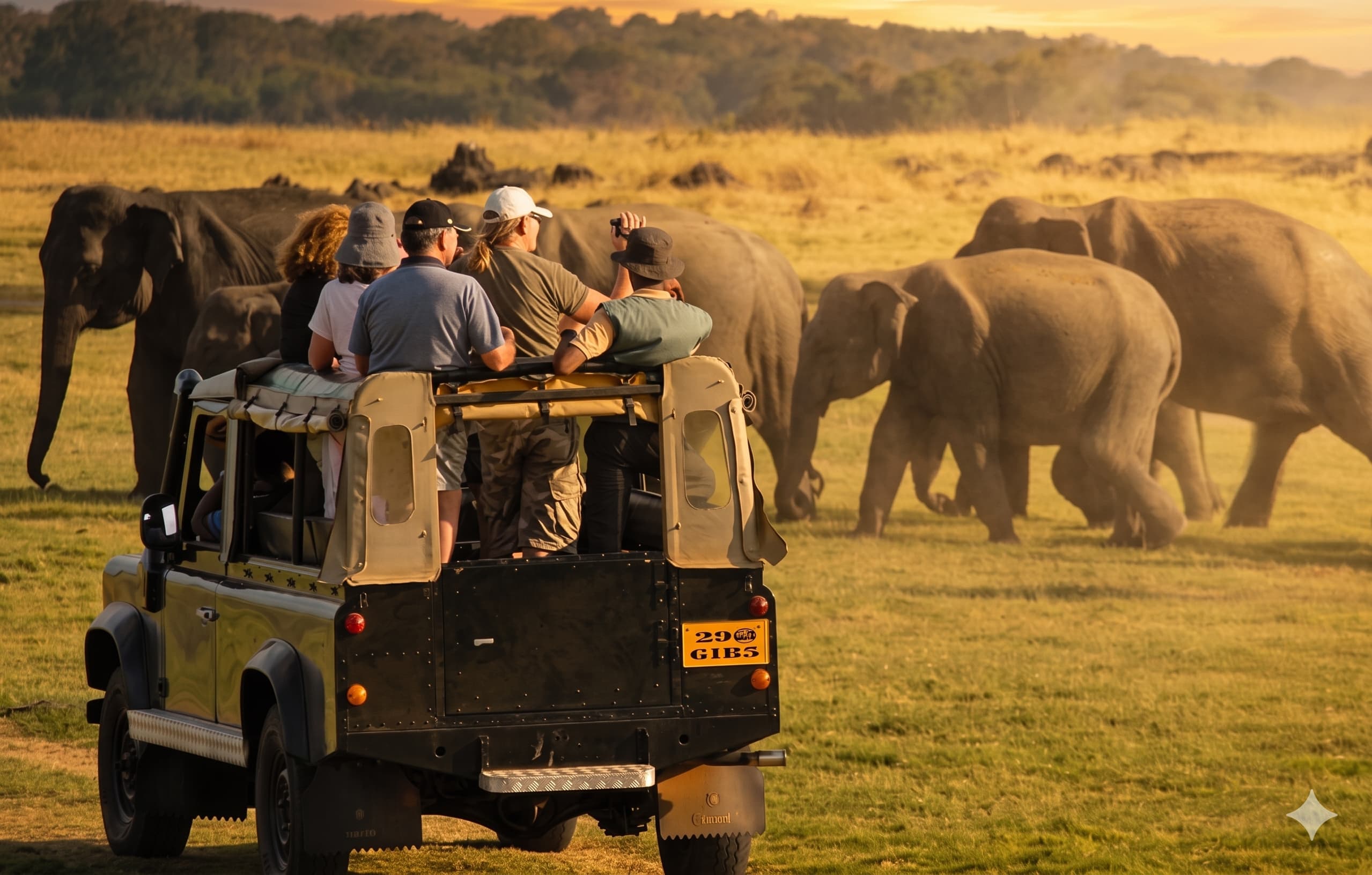
For example, if you are planning to explore the country's renowned national parks, such as taking a Yala National Park Safari Guide tour, check whether "guided 4x4 wildlife safaris" are explicitly covered. While most standard policies cover basic safaris, some might have stipulations regarding the type of vehicle or the specific location.
Similarly, if you intend to go surfing in Arugam Bay, scuba diving in Trincomalee, or white-water rafting in Kitulgala, you must confirm that these specific activities are included. Scuba diving often comes with depth restrictions (e.g., covered only up to 18 metres unless you have an advanced certification). If your planned activities are not covered by a standard policy, you will usually need to purchase an "adventure sports add-on" or seek out a specialist insurer that caters specifically to active travellers. Never assume that an activity is covered just because it is a popular tourist attraction.
4. Healthcare in Sri Lanka
Understanding the healthcare landscape in your destination country is an important part of travel preparation. Sri Lanka boasts a relatively well-developed healthcare system compared to many other nations in the region, characterised by a dual system of public and private providers.
The public healthcare system is free for Sri Lankan citizens and provides widespread coverage across the island. However, public hospitals are often underfunded, understaffed, and overcrowded, leading to long wait times and a lack of access to the latest medical technologies. For this reason, most foreign visitors and expatriates choose to use the private healthcare system.
Private hospitals and clinics, primarily located in major urban centres like Colombo, Kandy, and Galle, offer a high standard of care. They are generally well-equipped with modern medical technology and staffed by highly trained medical professionals, many of whom have received education or training internationally and speak excellent English. In the event of a medical emergency or illness, you will almost certainly want to be treated at a private facility.
It is crucial to understand that private healthcare in Sri Lanka is a fee-for-service system. Without travel insurance, you will be expected to pay out-of-pocket for all treatments, consultations, and medications. In some cases, hospitals may require an upfront deposit or proof of ability to pay before admitting you for treatment. This is where a robust travel insurance policy becomes invaluable. Your insurer can often provide a guarantee of payment directly to the hospital, alleviating the stress of arranging large sums of money while you are unwell.
If you are travelling to more rural areas, such as the remote hill country or secluded beaches, access to advanced medical care will be significantly limited. Local clinics can handle minor ailments, but serious injuries or complex medical conditions will necessitate transport to a major city, underscoring the importance of having adequate medical evacuation coverage included in your policy.
5. Choosing the Right Policy (brand neutral)
Selecting the right travel insurance policy is not a one-size-fits-all process. The best policy for you will depend on a variety of individual factors, including your age, your health status, the planned activities on your itinerary, and the overall value of your trip. Here is a step-by-step approach to finding the optimal coverage for your Sri Lankan adventure:
Assess Your Needs: Begin by outlining the specifics of your trip. How long will you be travelling? Have you planned a 2-Week Sri Lanka Itinerary, or are you staying for a month? Are you travelling solo, as a couple, or with a family? What activities do you plan to undertake? Are you carrying expensive electronics that require high baggage coverage limits? Answering these questions will help you determine the necessary coverage levels and identify any specific add-ons you might need, such as adventure sports coverage or high-value item protection.
Compare Multiple Providers: Do not simply settle for the first policy you find or the one suggested by your airline during the booking process. Take the time to shop around and compare quotes from several different reputable travel insurance providers. Use online comparison tools to evaluate the coverage limits, deductibles (the amount you pay out-of-pocket before the insurance kicks in), and overall premiums of various plans side-by-side.
Read the Fine Print: This is arguably the most crucial step. Never purchase a policy based solely on the marketing summary. You must delve into the Policy Wording or Product Disclosure Statement (PDS) to understand the exact terms, conditions, and, most importantly, the exclusions. Pay close attention to definitions of pre-existing medical conditions, rules regarding alcohol consumption (claims are often denied if you were intoxicated at the time of an incident), and requirements for reporting incidents to local authorities.
Consider Annual vs. Single-Trip Policies: If you are a frequent traveller who takes multiple trips a year, it may be more cost-effective to purchase an annual multi-trip policy rather than buying separate coverage for each journey. However, ensure that the annual policy covers all the destinations you plan to visit and provides adequate coverage duration for each individual trip (e.g., maximum of 30 or 60 days per trip).
Check for Pre-Existing Conditions Coverage: If you have any pre-existing medical conditions, you must declare them when purchasing your policy. Failure to do so could result in any related claims being denied. Some policies automatically cover a list of common pre-existing conditions, while others may require you to undergo a medical screening or pay an additional premium for coverage.
6. Making a Claim
In the unfortunate event that you need to use your travel insurance, knowing how to navigate the claims process efficiently can save you a significant amount of time and frustration. The key to a successful claim lies in preparation, documentation, and prompt communication.
Contact Your Insurer Immediately: Most insurance policies include a 24-hour emergency assistance hotline. If you require medical treatment, are involved in an accident, or need to arrange medical evacuation, you should contact this hotline as soon as it is safe and practical to do so. The assistance team can guide you to an approved medical facility, liaise with doctors on your behalf, and potentially arrange direct billing with the hospital, so you do not have to pay large sums out-of-pocket. If you delay contacting them, they may refuse to cover certain costs.
Gather Extensive Documentation: Insurance companies require proof to process a claim. Therefore, you must meticulously collect and retain all relevant documentation. This includes:
- Medical Claims: Keep all medical reports, hospital admission and discharge summaries, prescriptions, and original receipts for any payments made.
- Theft or Loss Claims: If your belongings are stolen, you must report the incident to the local Sri Lankan police as soon as possible (usually within 24 hours) and obtain a written police report. If an airline loses your luggage, obtain a Property Irregularity Report (PIR) from the carrier before leaving the airport.
- Cancellation or Delay Claims: Retain proof of the reason for cancellation (e.g., a doctor's certificate if you are ill) and keep all receipts for non-refundable expenses or additional costs incurred due to delays.
Submit Your Claim Promptly: Do not wait until you return home to start the claims process if you can avoid it. Many insurers now offer online portals or mobile apps that allow you to submit claims and upload supporting documents while you are still travelling. Be aware that most policies have strict time limits for filing a claim—often within 30 to 60 days of the incident occurring.
If you encounter any issues during your trip that require local assistance or if you need to adjust your travel plans due to an emergency, please do not hesitate to contact our team. While we cannot process insurance claims on your behalf, our local experts can provide valuable on-the-ground support and guidance.
7. Common Mistakes
Even the most seasoned travellers can sometimes make errors when it comes to travel insurance. Avoiding these common mistakes will ensure that your coverage remains valid and that you are fully protected throughout your Sri Lankan journey.
Assuming Domestic Health Insurance Provides Coverage: Many people mistakenly believe that their standard domestic health insurance policy will cover them while travelling internationally. While some policies may offer limited emergency coverage abroad, they almost never cover the full spectrum of travel-related risks, such as trip cancellation, lost baggage, or the exorbitant costs of international medical evacuation. Always secure a dedicated travel insurance policy.
Failing to Declare Pre-Existing Conditions: As mentioned earlier, honesty is the best policy when applying for travel insurance. Failing to disclose a pre-existing medical condition—even one that seems minor or is well-managed—can invalidate your entire policy if you need to make a claim related to that condition.
Ignoring the Alcohol and Drugs Clause: This is a very common reason for claims being denied. Most travel insurance policies contain strict exclusions regarding incidents that occur while the insured person is under the influence of alcohol or illegal substances. If you have an accident while intoxicated, whether it is a slip and fall or a moped crash, your insurer is highly likely to reject your claim.
Riding a Moped or Motorcycle Without Proper Licensing: Renting a scooter or motorcycle is a popular way to explore Sri Lanka's coastal roads. However, if you are involved in an accident, your insurance will only cover you if you were riding legally. This typically means you must possess a valid motorcycle license from your home country, hold an International Driving Permit (IDP) endorsed for motorcycles, and be wearing a helmet at the time of the incident. If you only have a standard car license, your claim will almost certainly be denied.
Leaving Belongings Unattended: Baggage and personal belongings coverage requires you to take reasonable care of your items. If your camera is stolen because you left it unattended on a beach towel while you went swimming, or if your phone is taken from an unlocked hotel room, the insurer may argue that you were negligent and refuse to pay the claim. Always use hotel safes and keep your valuables secure and within sight.
By understanding the intricacies of travel insurance and carefully selecting a policy that aligns with your specific needs and itinerary, you can embark on your Sri Lankan adventure with confidence. Should you have any further questions about planning your trip or need assistance crafting the perfect itinerary, feel free to contact us today. Our team at Tarragon Leisure is dedicated to ensuring your journey is as safe as it is spectacular.
Frequently Asked Questions
Handpicked Tours for This Journey

Sigiriya Rock Fortress Discovery
Yala Wildlife Safari