
Whale Watching in Mirissa: The Complete Guide (2026)
The Short Version
Mirissa on Sri Lanka's south coast is one of the best places in the world to see blue whales and sperm whales in the wild. The season runs November to April, with peak sightings in January to March. Morning departures from Mirissa Harbour give you the best conditions and highest chance of a sighting.
Planning a trip to Sri Lanka?
We guide you from visa to hotels, beaches to hidden temples — and everything in between. Just drop us a WhatsApp, we reply in minutes.
Whale Watching in Mirissa: The Complete Guide
The southern coast of Sri Lanka is synonymous with golden beaches, excellent surf breaks, and swaying palm trees. But look a little further out into the deep blue expanse of the Indian Ocean, and you'll find something truly monumental. Just a few nautical miles off the coast of Mirissa lies one of the world's most spectacular wildlife arenas—a migratory superhighway for the largest creatures to have ever lived on Earth.
Whale watching in Mirissa has grown from a niche activity into a bucket-list experience for wildlife enthusiasts traveling to Sri Lanka. The sheer thrill of seeing a Blue Whale—a magnificent marine giant that can grow up to 30 meters in length and weigh over 150 tons—breach the surface is unparalleled. Yet, navigating the myriad of tour operators, understanding the seasonality, and ensuring you embark on a responsible journey requires a bit of planning.
In this comprehensive guide, we'll dive deep into everything you need to know about whale watching in Mirissa in 2026. Whether you are adding this to our South Coast Vibe itinerary, planning an independent excursion to Mirissa, or incorporating it into a Sri Lanka Honeymoon Itinerary, this guide will ensure you're fully prepared for the ocean safari of a lifetime.
1. Why Mirissa?
When it comes to whale watching in Sri Lanka, Mirissa is undoubtedly the premier destination. But why is this small coastal town such a hotspot for cetaceans? The secret lies in the unique bathymetry (underwater topography) of the region.
Just off the southern coast, the continental shelf drops off sharply, creating a deep-water trench unusually close to the shoreline. This steep drop-off creates an upwelling of nutrient-rich waters from the ocean depths. These nutrients support massive blooms of phytoplankton and zooplankton, which in turn attract vast swarms of krill—the primary food source for baleen whales, including the mighty Blue Whale.
Furthermore, Sri Lanka is strategically positioned along the migratory routes of several whale species traveling between the Arabian Sea and the Bay of Bengal. This geographic advantage means that whales do not just pass by; they linger to feed in these fertile waters, making sightings incredibly frequent and reliable. Unlike other global whale-watching destinations where you might spend hours traversing the open ocean with binoculars glued to your eyes, boats in Mirissa often spot marine life relatively quickly, sometimes within just an hour of leaving the harbor.
2. The Season
Timing is everything when it comes to wildlife encounters, and whale watching is no exception. While the ocean off Mirissa is technically open year-round, the conditions and the presence of whales change drastically with the monsoon cycles.
The Peak Season (November to April)
The undisputed best time for whale watching in Mirissa is from November to April. During these months, the northeast monsoon affects the opposite side of the island, leaving the southern and western coasts with dry, sunny days and calm, flat seas.
- November & December: The season kicks off as the ocean settles down. Sightings become frequent, though the sea can occasionally still have a slight swell.
- January to March: These are the absolute peak months. The sea is often like glass in the early mornings, making it easy to spot a spout of water in the distance. The concentration of whales feeding off the coast is at its highest, and operators often boast a 90% to 95% success rate for Blue Whale sightings.
- April: As April progresses, the inter-monsoonal period begins, and the sea can start to get a bit choppier, but sightings remain very strong.
The Off-Season (May to October)
From May to October, the southwest monsoon hits the southern coast of Sri Lanka. During this time, the ocean becomes rough, with large swells and unpredictable weather. Most responsible boat operators in Mirissa suspend their whale-watching tours during this period, as the conditions are unsafe for small passenger vessels, and the whales generally move away from the turbulent coastal waters. If you are visiting Sri Lanka during these months and are desperate to see whales, your best bet is to head to Trincomalee on the east coast, where the season runs from May to October.
To plan your trip perfectly, check out our broader guide on the best time to visit Sri Lanka.
3. Species You'll See
While the Blue Whale is the undisputed star of the show, the waters off Mirissa are teeming with a diverse array of marine life. A trip out onto the ocean is a true safari.
The Blue Whale
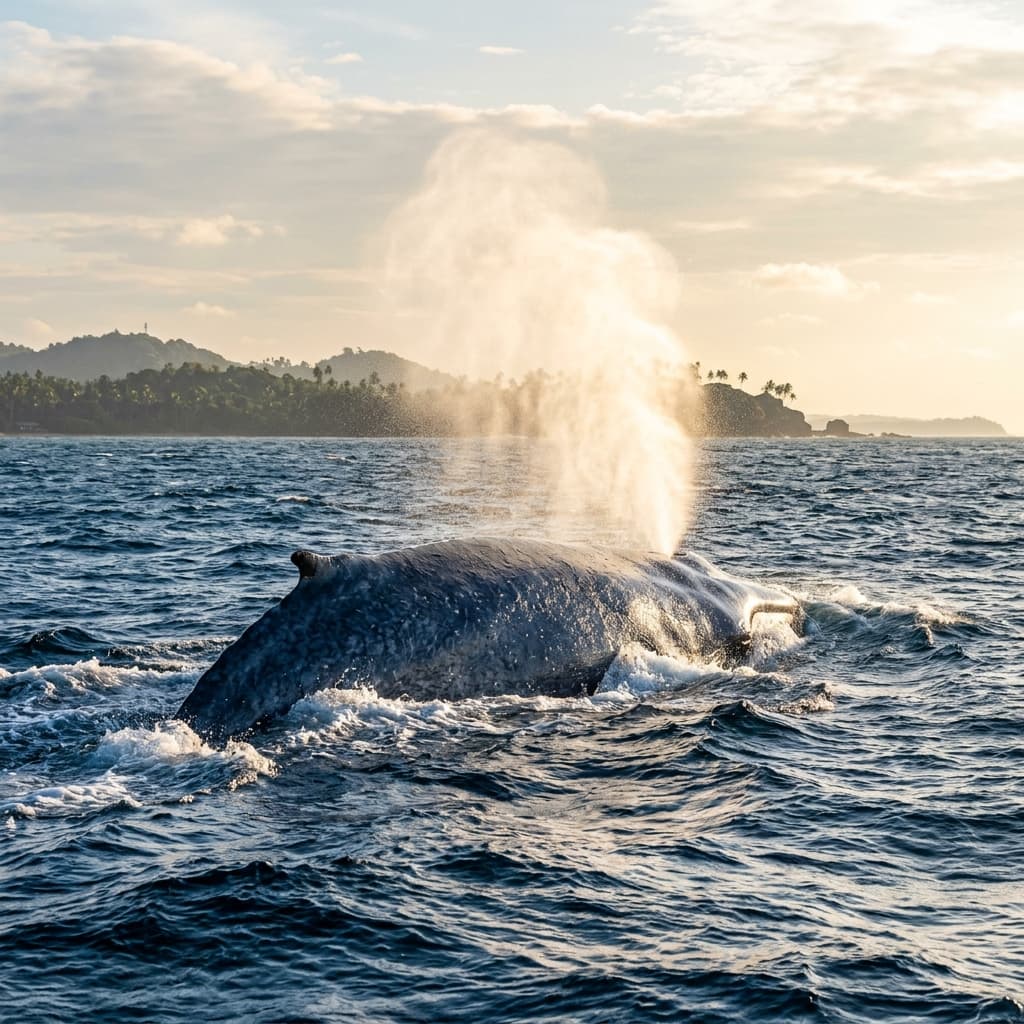
The primary reason visitors flock to Mirissa is the chance to see a Blue Whale. These colossal creatures are the largest animals known to have ever existed. When you see a Blue Whale, the first thing you'll notice is the towering "blow"—a geyser of water and mist that can shoot up to 9 meters into the air. Following the blow, the long, sleek, slate-gray back breaks the surface. They often take several shallow dives before a deep dive, marked by the majestic lifting of their massive tail fluke out of the water.
The Sperm Whale
Sperm Whales are also frequently spotted off the coast of Mirissa. Unlike the solitary Blue Whales, Sperm Whales are often seen in pods. They have distinctive, block-shaped heads and a blow that angles sharply forward and to the left. These toothed whales dive to incredible depths to hunt giant squid, so seeing them resting at the surface between deep dives is a spectacular sight.
Bryde’s Whales and Fin Whales
Though less common than Blue and Sperm whales, Bryde's Whales (pronounced "Broo-duhs") and Fin Whales are occasional visitors. Fin Whales are the second-largest animals on earth and are incredibly fast swimmers, earning them the nickname "the greyhounds of the sea."
Dolphins
Almost every whale watching trip in Mirissa includes an encounter with pods of dolphins. Spinner Dolphins are the most common; true to their name, they are famous for leaping out of the water and spinning joyfully in the air. You might also encounter Bottlenose Dolphins and Striped Dolphins surfing the bow waves of your boat.
Other Marine Life
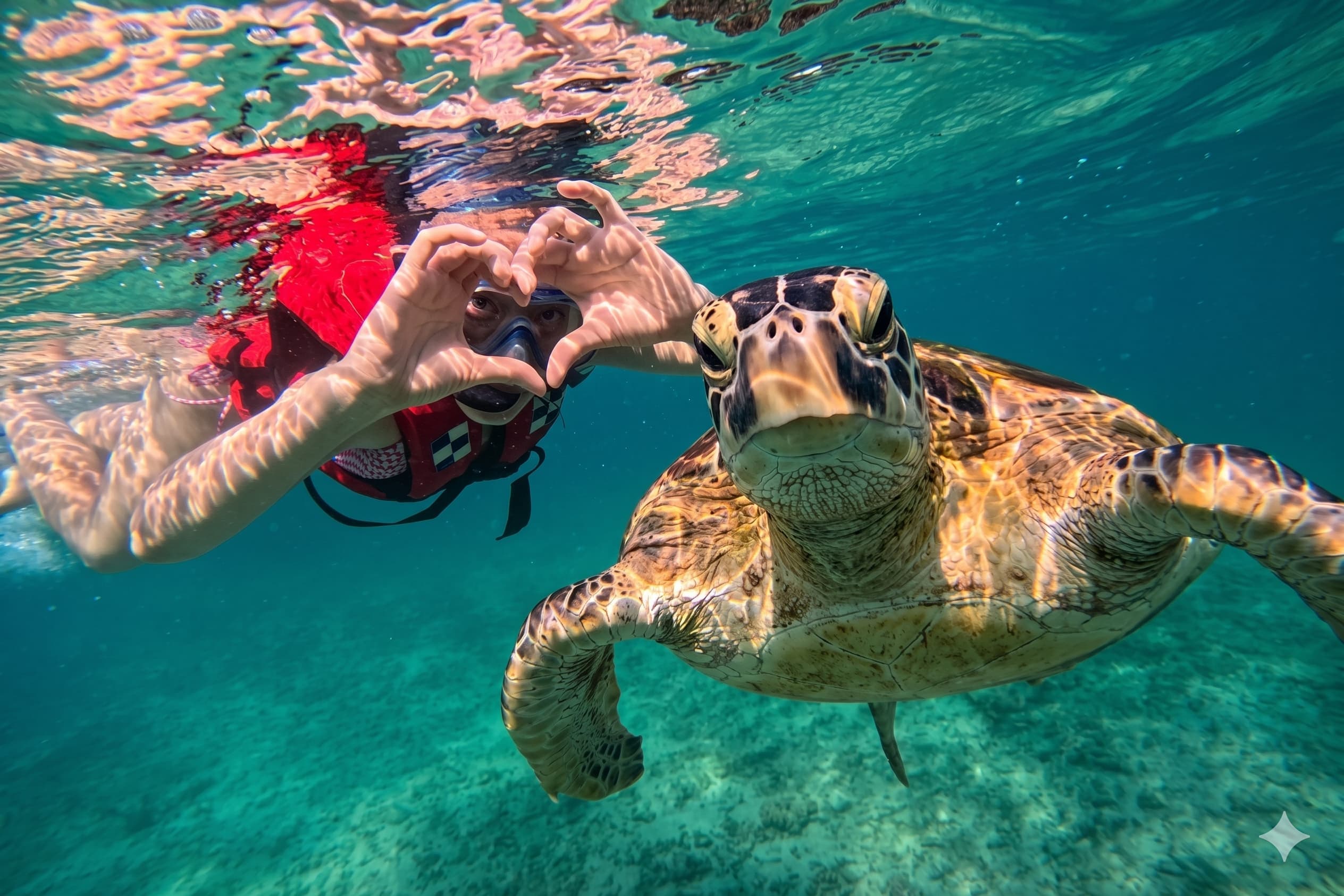
Keep your eyes peeled for other marine inhabitants. It's not uncommon to spot sea turtles gliding just below the surface, flying fish skimming across the waves, or even the occasional whale shark or manta ray.
4. Choosing a Responsible Boat
As whale watching has gained immense popularity in Mirissa, the number of operators has skyrocketed. Unfortunately, not all operators adhere to ethical wildlife viewing practices. The enthusiasm to give tourists a "good show" can sometimes lead to boats crowding the animals, chasing them, or getting far too close, which causes immense stress to the whales and disrupts their feeding patterns.
Choosing a responsible operator is the single most important decision you will make regarding your whale watching experience. Here is what to look for and expect from an ethical tour:
- Distance and Approach: International guidelines dictate that boats should not approach closer than 100 meters to a whale. A responsible captain will slow down to a "no-wake" speed well before reaching this distance and will position the boat parallel to the whale's path, rather than approaching head-on or from behind.
- No Chasing: If a whale dives or moves away, a responsible boat will not aggressively chase it. They will wait to see if it surfaces nearby or move on to find another individual.
- Time Limitations: Ethical operators will limit the time spent with a single whale or pod (usually to around 20-30 minutes) to minimize disturbance, especially if there are other boats in the vicinity.
- Educational Focus: Look for tours that provide a knowledgeable naturalist or marine biologist on board. A good tour is not just about pointing at an animal; it's about understanding its behavior, ecology, and the conservation efforts needed to protect it.
- Vessel Safety: Ensure the boat is properly registered, carries adequate life jackets for all passengers (and mandates wearing them, at least while moving), and has a professional, experienced crew.
At Tarragon Leisure, we only partner with the most reputable and ethical operators in Mirissa. If you are booking one of our curated itineraries like the South Coast Vibe tour, you can rest assured that your whale watching experience will be both spectacular and completely respectful of the marine environment.
5. What to Expect
Knowing what to expect can significantly enhance your enjoyment of the trip. Here is a breakdown of a typical whale watching excursion:
The Early Start
The ocean is calmest in the early morning, so tours depart early. You will typically need to be at Mirissa Harbour between 6:00 AM and 6:30 AM. The harbor itself is a bustling, colorful scene, filled with traditional multi-decked fishing trawlers and modern passenger boats.
The Journey Out
Once you clear the harbor breakwater, the boat will head out to the continental shelf. This journey usually takes about 45 minutes to an hour. During this time, the crew will often serve a simple breakfast (usually sandwiches, fruit, and tea or coffee).
The Search
Finding whales requires a keen eye. The crew will be scanning the horizon for the tell-tale spout of water. Once a blow is spotted, the captain will adjust the course. This is where patience is key; it can take time to locate the animals, and sometimes they may go on long, deep dives that last up to 20 minutes before resurfacing.
The Encounter
When the boat approaches a whale, the engines should be cut or reduced to idle. This is the moment of magic. You will hear the powerful exhalation of the blowhole, smell the distinct (and pungent!) "whale breath," and watch as the massive creature glides effortlessly through the water. Have your camera ready, but remember to take a moment to simply watch with your own eyes and absorb the magnitude of the experience.
Seasickness: A Reality Check
Even on a seemingly calm day, the Indian Ocean has a long, rolling swell that can induce motion sickness in even the hardiest of sailors. If you are prone to seasickness, or even if you are unsure, it is highly recommended to take preventative medication (like Avomine) at least 30 to 60 minutes before boarding.
- Tips for Seasickness: Don't go on an empty stomach, but avoid a heavy, greasy breakfast. Once on board, stay on the lower deck where the motion is less pronounced. Keep your eyes fixed on the horizon, not on your phone or camera screen. Stay hydrated, and if you feel ill, let the crew know—they are very experienced in handling seasick passengers and usually have remedies or comfortable spots available.
Duration
Most tours last between 3 and 5 hours. However, this is heavily dependent on how far out the whales are feeding that day. Some days you might be back by 10:30 AM, while on other days, the boat might not return until 12:30 PM.
6. Beyond Whale Watching
Mirissa is an excellent base for exploring the wider south coast. After your morning on the ocean, the afternoon is yours to enjoy.
- Relax on Mirissa Beach: The main beach in Mirissa is a crescent of golden sand lined with laid-back cafes and restaurants. It's the perfect place to grab a fresh seafood lunch and a cold Lion beer.
- Parrot Rock and Coconut Tree Hill: Take a stroll to Parrot Rock for panoramic views of the bay, or head to the famous Coconut Tree Hill for the quintessential Sri Lankan coastal photograph.
- Surfing: While Mirissa itself has a decent beginner break, nearby Weligama is the surfing capital of the south coast, offering perfect waves for those looking to learn.
- Explore Galle Fort: Just an hour's drive west lies Galle, a UNESCO World Heritage site. Check out our in-depth Galle Fort guide to explore its 17th-century Dutch ramparts, boutique shops, and curated cafes on a perfect late-afternoon excursion.
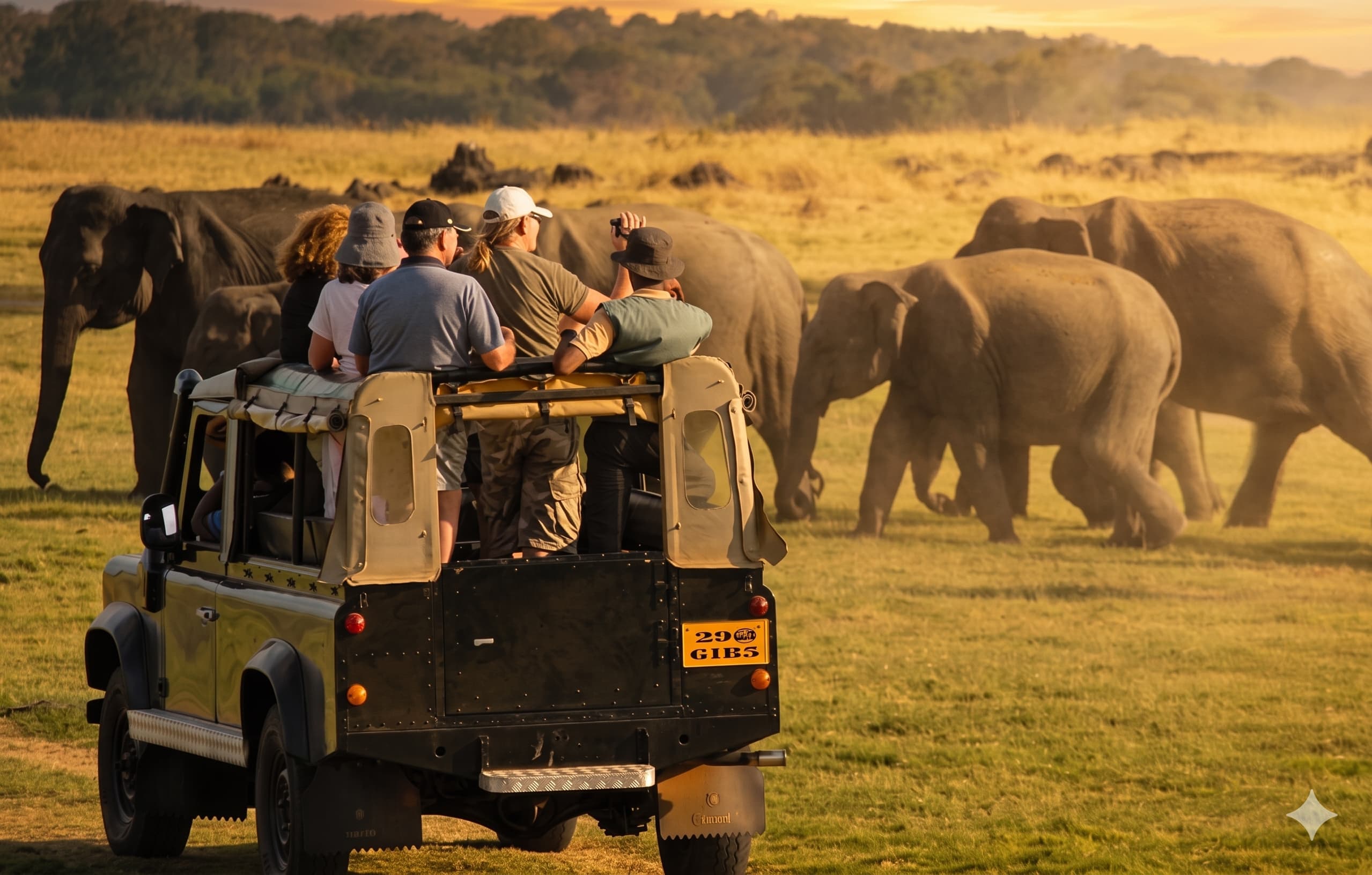
- Inland Safaris: If the marine safari whet your appetite for wildlife, consider heading east for a terrestrial adventure. A Yala National Park Safari offers the chance to spot leopards, elephants, and sloth bears, making for an incredible wildlife contrast to the coastal whales.
7. Getting to Mirissa
Mirissa is highly accessible from most major tourist hubs in Sri Lanka.
- From Colombo/Airport: The easiest and fastest way to reach Mirissa from Bandaranaike International Airport (BIA) or Colombo is via the Southern Expressway (E01). A private taxi will take approximately 2.5 to 3 hours.
- From Galle: Mirissa is only a 45-minute to 1-hour drive from Galle along the scenic coastal road. You can take a taxi, a tuk-tuk, or the local bus.
- From Ella/Hill Country: Traveling from the hill country to the south coast is a popular route. A private taxi from Ella to Mirissa takes about 3.5 to 4 hours.
If you are looking for a seamless, expertly crafted journey that takes the hassle out of logistics, our team at Tarragon Leisure can arrange everything from your airport transfers to your boutique accommodation and, of course, your responsible whale watching tour. Contact us to start planning your bespoke Sri Lankan adventure.
Ready to witness the gentle giants of the Indian Ocean? The waters of Mirissa await.
Frequently Asked Questions
Handpicked Tours for This Journey
Yala Wildlife Safari
South coast vibe